

the unlikley icon
Fairline’s story begins in a place few would associate with luxury yachts. In the early 1960s, long before the brand became a symbol of British craftsmanship and international prestige, a series of abandoned gravel pits sat quietly beside the River Nene. They were unremarkable, forgotten, and destined for nothing more than the slow creep of nature reclaiming the land. Yet Jack Newington saw something different. Where others saw dereliction, he saw potential. He transformed the site into Oundle Marina, a decision that would become the foundation for one of the most influential yacht builders in the world. It was a bold act of imagination, the kind that quietly alters the course of an industry, and it set in motion a story that would eventually stretch across oceans.
By 1967, the first Fairline boat emerged from this unlikely birthplace. The Fairline 19 was a modest river cruiser, handcrafted in GRP at a time when fibreglass was still considered daring. It was not a large boat, nor was it built for glamour, but it carried the essence of what Fairline would become. It was solid, thoughtfully designed, and built with a level of care that set it apart from the competition. It represented a shift in British leisure boating, a sign that modern materials and traditional craftsmanship could coexist in a way that felt both progressive and reassuring. The Fairline 19 was the beginning of a legacy that would stretch far beyond the quiet waterways of Northamptonshire.
When Jack’s son, Sam Newington, took over the company in 1971, Fairline entered a new era. Sam possessed a different kind of ambition, one that extended beyond the riverbanks of Northamptonshire. He believed Fairline could become a global name, and he set about expanding the company with a determination that would define the next two decades. Under his leadership, Fairline grew rapidly, embracing new technologies, new markets, and new ideas. By the end of the 1970s, the company had grown into a thriving business with 140 employees and a turnover of £5 million. The Fairline 40, launched during this period, became a defining model. It remained in production for more than a decade, earning a reputation for reliability, comfort, and seaworthiness. It was the boat that proved Fairline could compete with the best, not just in Britain, but across Europe and beyond. It became a familiar sight in marinas, a symbol of a brand that was beginning to find its voice.
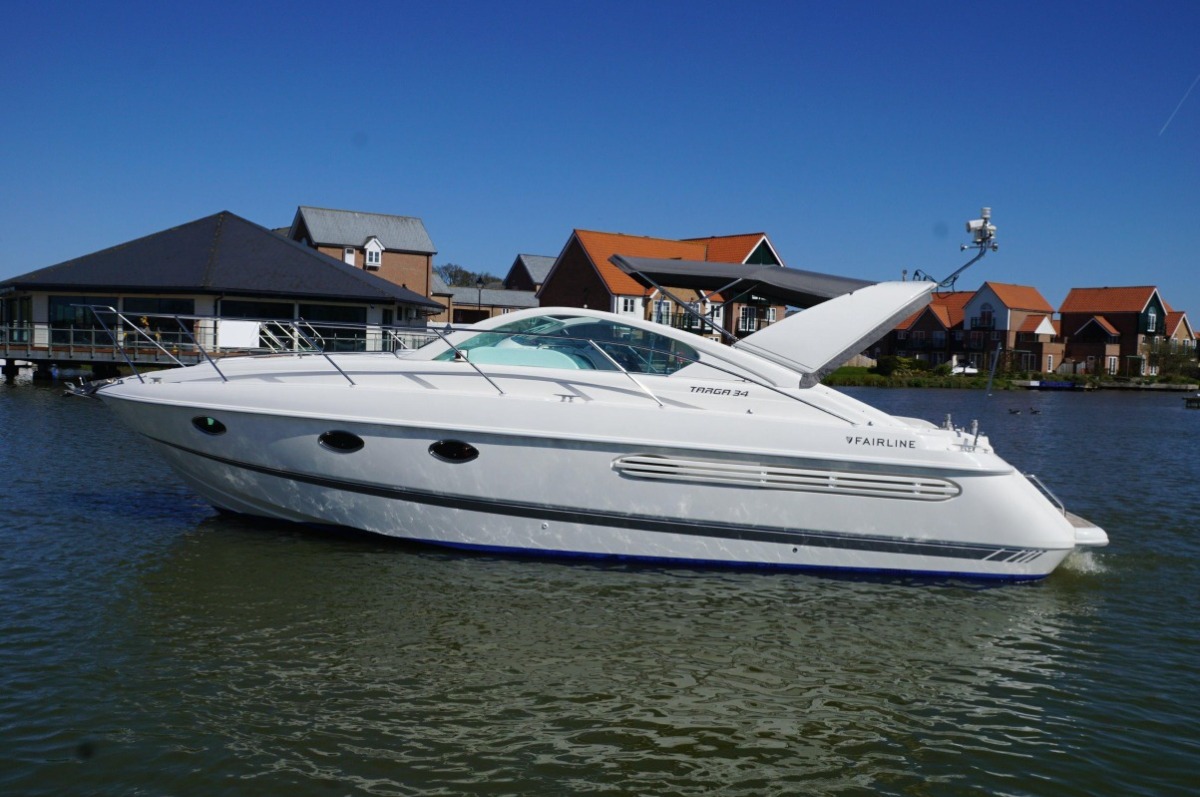
The 1980s marked a turning point. As boating culture evolved, so did Fairline’s vision. The decade saw the birth of the Targa line, a series of sleek, sporty cruisers that captured the imagination of a new generation of boaters. These were boats built for sunshine, speed, and the thrill of open water. They were designed for the Mediterranean as much as for British shores, and they introduced a new aesthetic to the brand. The Targa range did more than expand Fairline’s portfolio; it reshaped its identity. It signalled that Fairline was not just a builder of dependable cruisers, but a creator of stylish, performance driven yachts. The Targa models became synonymous with a certain kind of boating lifestyle, one defined by freedom, spontaneity, and the pleasure of being at sea. They were boats that invited their owners to chase horizons, to explore coastlines, and to embrace the joy of movement.
The 1990s brought another milestone with the introduction of the Squadron series. The first model, the Squadron 62, marked Fairline’s entry into the world of large, luxurious flybridge yachts. These were boats designed for long distance cruising, for families who wanted space, comfort, and the ability to explore far beyond the horizon. The Squadron line quickly became synonymous with elegance and capability. It offered expansive saloons, panoramic views, and layouts that felt more like floating homes than traditional motor yachts. The success of the Squadron series cemented Fairline’s reputation as a builder of serious cruising yachts. It also demonstrated the company’s ability to evolve, to understand the changing expectations of yacht owners, and to deliver products that felt both aspirational and practical. The Squadron models became the choice of those who valued refinement as much as performance, and they helped define Fairline’s presence in the large yacht market.
By the early 2000s, Fairline had become a global force. The company celebrated the production of its 10,000th yacht in 2002, a milestone that reflected decades of craftsmanship and international demand. Eight years later, the 12,000th yacht rolled out of the factory, a Squadron 55 destined for Italy. These achievements were more than numbers; they were proof of a brand that had earned the trust of boaters around the world. Fairline yachts could be found in marinas from the Solent to Sydney, from Miami to Mallorca, each one carrying the quiet confidence of British engineering. The brand had become a fixture of the global boating landscape, admired for its consistency, its design, and its unwavering commitment to quality. Owners spoke of their boats with affection, often keeping them for years, sometimes decades, a testament to the durability and timelessness of Fairline’s approach.
Yet even the strongest brands face challenges. The aftermath of the 2008 financial crisis hit the luxury market hard, and Fairline was not immune. In 2015, the company entered administration, a moment that could have marked the end of its story. Instead, it became a turning point. In early 2016, new investors revived the brand under the name Fairline Yachts Ltd. They brought fresh energy, modern thinking, and a commitment to restoring Fairline’s place among the world’s leading yacht builders. It was a rebirth, not a retreat. The new leadership recognised the value of Fairline’s heritage, but they also understood the need for innovation. They invested in new facilities, new technologies, and new design partnerships, setting the stage for a renaissance. The company began to feel alive again, driven by a renewed sense of purpose.
This revival ushered in a new design era defined by collaboration. Fairline embraced a tri national approach that blended British craftsmanship, Italian styling, and Dutch naval architecture. Alberto Mancini, the Italian designer known for his sculptural, automotive inspired lines, brought a new aesthetic to Fairline’s models. His work introduced a sense of fluidity and modernity that resonated with contemporary buyers. Vripack, the Dutch studio renowned for its engineering and hull design, added technical depth and efficiency. Together, they helped create yachts that were not only beautiful, but also capable, efficient, and unmistakably modern. This partnership marked a shift in Fairline’s design language, one that balanced tradition with innovation. It allowed the brand to honour its past while embracing the future.
The Targa 63 GTO became a symbol of this renaissance. With its sweeping lines, spacious layout, and advanced engineering, it captured the attention of the industry and earned the Best Exterior Design award at the World Yacht Trophies. It was more than a win; it was a statement that Fairline was not just back, but evolving. The Targa 63 GTO represented a new chapter, one defined by bold design, technical excellence, and a renewed sense of purpose. It showed that Fairline could compete at the highest level of modern yacht design, offering products that felt fresh, confident, and unmistakably premium.
Today, Fairline’s model range reflects a brand that understands the diverse ways people experience the water. The Squadron series continues to embody long range luxury. These yachts offer expansive saloons, generous cabins, and flybridges designed for entertaining. They feel like floating penthouses, crafted for owners who want to travel in comfort and style. The attention to detail is evident in every surface, every curve, and every piece of joinery. Fairline’s heritage of craftsmanship is alive in these boats, expressed through thoughtful layouts, refined materials, and a sense of calm sophistication. They are yachts designed for those who see the sea not just as a playground, but as a place to live, to explore, and to unwind.
The Targa line remains the heart of Fairline’s sporty spirit. With its sharp lines, open layouts, and performance driven hulls, it appeals to those who crave the thrill of fast cruising and the freedom of weekend escapes. The Targa 38, one of the most celebrated models in the range, still stands as a benchmark in its class. It represents the perfect balance of style, performance, and practicality. The Targa models capture the essence of Mediterranean boating, offering a blend of excitement and relaxation that feels timeless. They are boats that invite their owners to embrace spontaneity, to chase sunsets, and to enjoy the simple pleasure of being at sea.
Then there is the F//LINE 33, a striking dayboat that blends retro inspiration with modern engineering. Its design nods to the glamour of 1960s sports cars, yet its performance and detailing are unmistakably contemporary. It is a boat that turns heads in every marina, a reminder that Fairline is not afraid to innovate. The F//LINE 33 represents a new direction for the brand, one that embraces the growing demand for stylish, high performance dayboats. It is a testament to Fairline’s ability to adapt, to understand emerging trends, and to create products that feel fresh and relevant. It
Then there is the F//LINE 33, a striking dayboat that blends retro inspiration with modern engineering. Its design nods to the glamour of 1960s sports cars, yet its performance and detailing are unmistakably contemporary. It is a boat that turns heads in every marina, a reminder that Fairline is not afraid to innovate. The F//LINE 33 represents a new direction for the brand, one that embraces the growing demand for stylish, high performance dayboats. It is a testament to Fairline’s ability to adapt, to understand emerging trends, and to create products that feel fresh and relevant. It shows that the brand can be playful as well as serious, bold as well as refined.
The Phantom 65 marks Fairline’s return to the sportsbridge segment. Inspired by the Targa 65, it brings together the best elements of a flybridge and a sports cruiser. The result is a yacht that feels dynamic yet spacious, sporty yet refined. It offers the elevated views of a flybridge without sacrificing the sleek profile of a performance cruiser. It is a boat designed for owners who want versatility without compromise, a yacht that feels equally at home on long passages and short coastal hops. The Phantom 65 reflects Fairline’s confidence, its willingness to explore new ideas, and its understanding of what modern yacht owners desire.
Across all these models, one thread remains constant: craftsmanship. Fairline yachts are still built with meticulous attention to detail, from the joinery to the upholstery. This commitment to quality is one of the reasons Fairline boats hold their value so well on the brokerage market. Buyers know they are purchasing not just a yacht, but a piece of British boatbuilding heritage. Fairline’s reputation for durability, thoughtful design, and timeless styling ensures that its yachts remain desirable long after they leave the factory. The brand’s commitment to excellence is evident in every seam, every surface, and every carefully considered detail.
Fairline’s influence extends beyond its products. The Fairline Owners Club, founded in 2003, has grown into a vibrant community of enthusiasts who share knowledge, stories, and a deep appreciation for the brand. It is a testament to the loyalty Fairline inspires, a loyalty earned through decades of consistent quality and thoughtful design. Owners gather at events around the world, united by a shared passion for the sea and for the boats that carry them across it. The sense of community is strong, built on shared experiences, shared journeys, and a shared love of craftsmanship. It is a reminder that a Fairline yacht is more than a vessel; it is a gateway to a lifestyle.
In recent years, Fairline has continued to expand its global presence. New international dealerships have strengthened the brand’s reach, while sustainability initiatives reflect a commitment to the future of boating. Interviews with CEO Paul Grys reveal a company focused on innovation, efficiency, and the evolving expectations of modern yacht owners. New models continue to debut at major boat shows, each one reinforcing Fairline’s position as a leader in the marine industry. The brand’s future feels assured, shaped by a blend of heritage, innovation, and a deep understanding of what yacht owners truly value. Fairline stands today as a brand that honours its past while embracing the possibilities of tomorrow, a company that continues to define what luxury on the water truly means.